Cinematic · Orchestral · Contemporary
Philosophy, history, literature, and faith, set to music.
As ancient as poetry
To teachTo moveTo delight
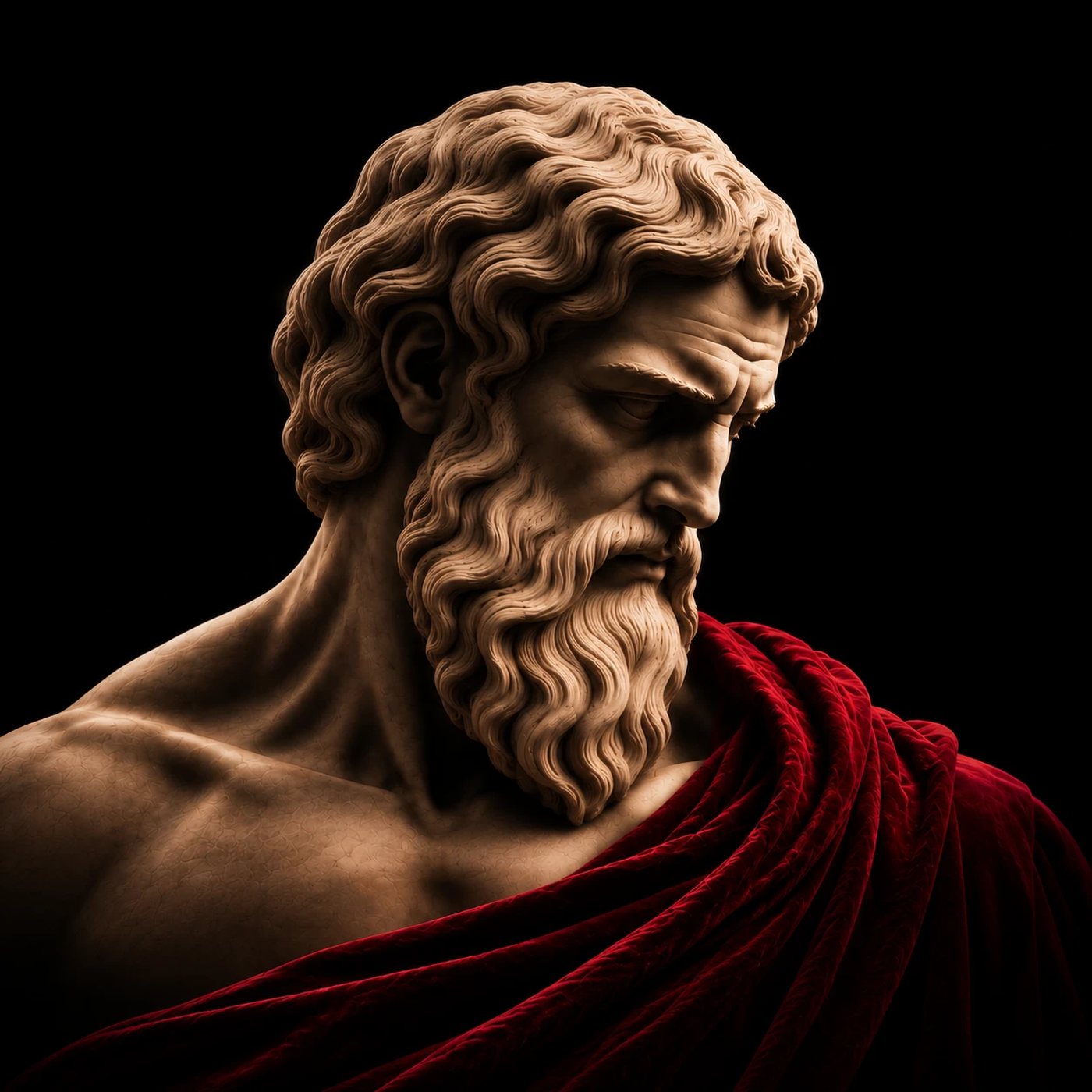
About Aristocles
Aristocles is a musical artist who brings philosophy, history, literature, and faith to life in a fusion of cinematic, orchestral, and contemporary music.
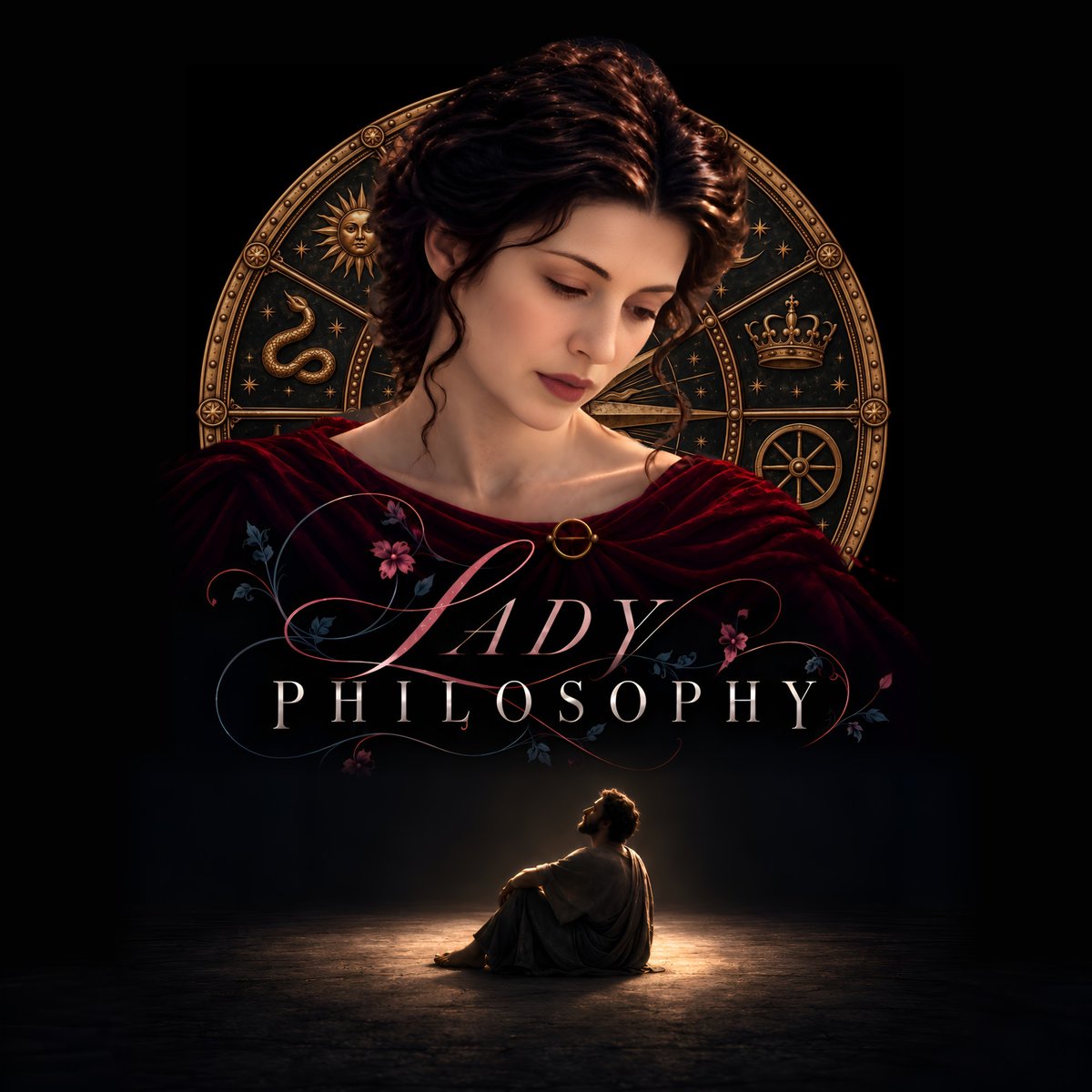
Guided by Lady Philosophy and the example of Socrates, he writes compositions that explore questions of truth, virtue, love, suffering, and the destiny of the human soul.
He draws on the intellectual and spiritual traditions of Western civilization to awaken wonder, stir the affections, and lead the mind toward what is true, good, and beautiful.
His purpose is as ancient as poetry: to teach, to move, and to delight.
The Works
Voices from the ancient world
II — Enchiridion
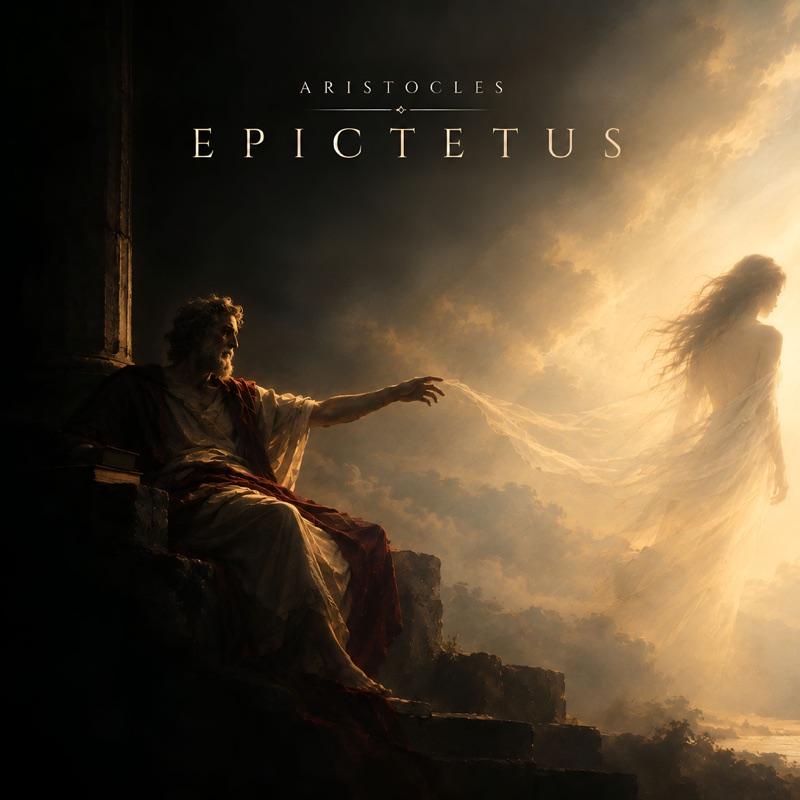
Epictetus
Listen to EpictetusEpictetus...
You taught me what no chain could take. Then I came upon the word... Returned.
He held the iron, not your will, The hour, but not the choice. The man in chains was sovereign still— No master owned his voice.
Beside a bed, a candle burns; He kisses her before the dawn. You tell him what the wise man learns: She may be here—and then be gone.
Not lost, you say, but given back, A gift that none could own. But can the wisdom of that act Console the one left all alone?
Epictetus—what was lent? The child, or every hour we spent? I know the hand must open wide When what we love must leave our side.
Yet when her little footsteps cease, Must calling it returned bring peace?
I bring him bread; I stay till dawn, His doorway cold and bare. You say I need not mourn what's gone To show him that I care.
Yet if my eyes betray a tear, What judgment must be wrong? I knew she couldn't linger here. I only knew her song.
Epictetus—what was lent? The child, or every hour we spent? I know the hand must open wide When what we love must leave our side.
Yet when her little footsteps cease, Must calling it returned bring peace?
Not every tear condemns the stars. Not every ache is fate defied. A thing was never wholly ours— And still was good while at our side.
Epictetus... What was lent?
Epictetus... What was spent?
Epictetus—what was lent? The child, the days, the years we spent. I know the hand must open wide; No love can turn the mortal tide.
But if her life was good, then why Must grief itself be judged a lie?
You taught me how to let her go. I ask you how to love her still.
Not lost... Returned... But not undone.
III — The Odyssey
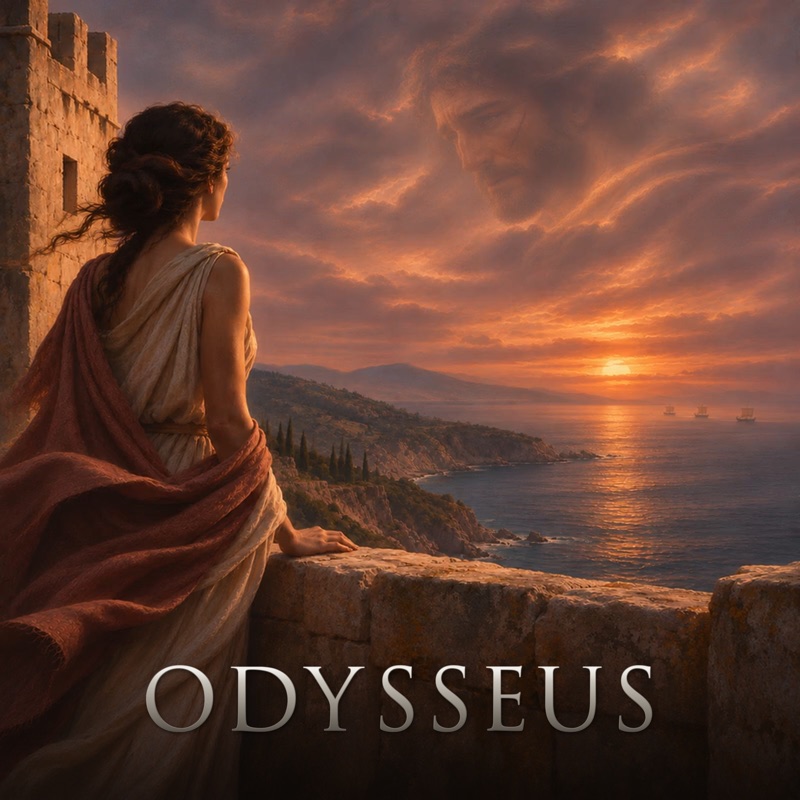
Odysseus
Listen to OdysseusOdysseus...
Where have you been?
Each dawn I watched the empty blue, Each night I pulled the woven thread. They swore the sea had swallowed you; I kept your place when hope seemed dead.
By day I wove, by night unmade; I kept the vow that we had made.
I kept the fire, I kept your name; Yet years and deeds can alter men. If you return through war and fame, What kind of man comes home again?
Odysseus—where have you been, When I needed you the most? I watched each sail come home again— No sign of you along the coast.
I kept the hearth against their claim; Come home in deed, and bear your name.
I feared not only death at sea, Nor scars that war might carve in you; I feared the man returned to me Might wear your face, yet not be true.
For honor rests in others’ eyes, And fortune shifts beneath our feet; The good is lived, not held as prize, In acts that make a life complete.
Let kingdoms praise the wars you won; Let poets sing what you have done. Yet honor cannot make life whole If glory draws it from its goal.
Odysseus...
Odysseus...
I do not need the legend.
Come home.
Odysseus—where have you been, When I needed you the most? I watched each sail come home again, And still I waited on the coast.
Let others praise your war and fame; Come home in deed, and bear your name.
Odysseus...
Come home.